Phoenix summers test more than your tenants' patience; they test your cooling systems, exterior materials, and maintenance budget.
When the Arizona sun turns a rental into an oven, a neglected AC unit can become an expensive emergency, so preparing early helps protect your investment and keep tenants comfortable.
From AC maintenance to preparing vacant homes, take practical steps before summer peaks. These strategies help you prioritize repairs, manage costs, and protect rentals across the Valley.
Key Takeaways
Schedule air conditioning maintenance before AZ summer temperatures peak to improve reliability and reduce avoidable breakdowns.
Protect Phoenix rental properties with proper ventilation, airflow, shade, and window sealing to help manage extreme heat and utility bills.
Prepare vacant homes and establish clear tenant communication procedures to protect your investment and respond quickly to cooling problems.
How to Maintain Your AC Unit Before Arizona's Hottest Months
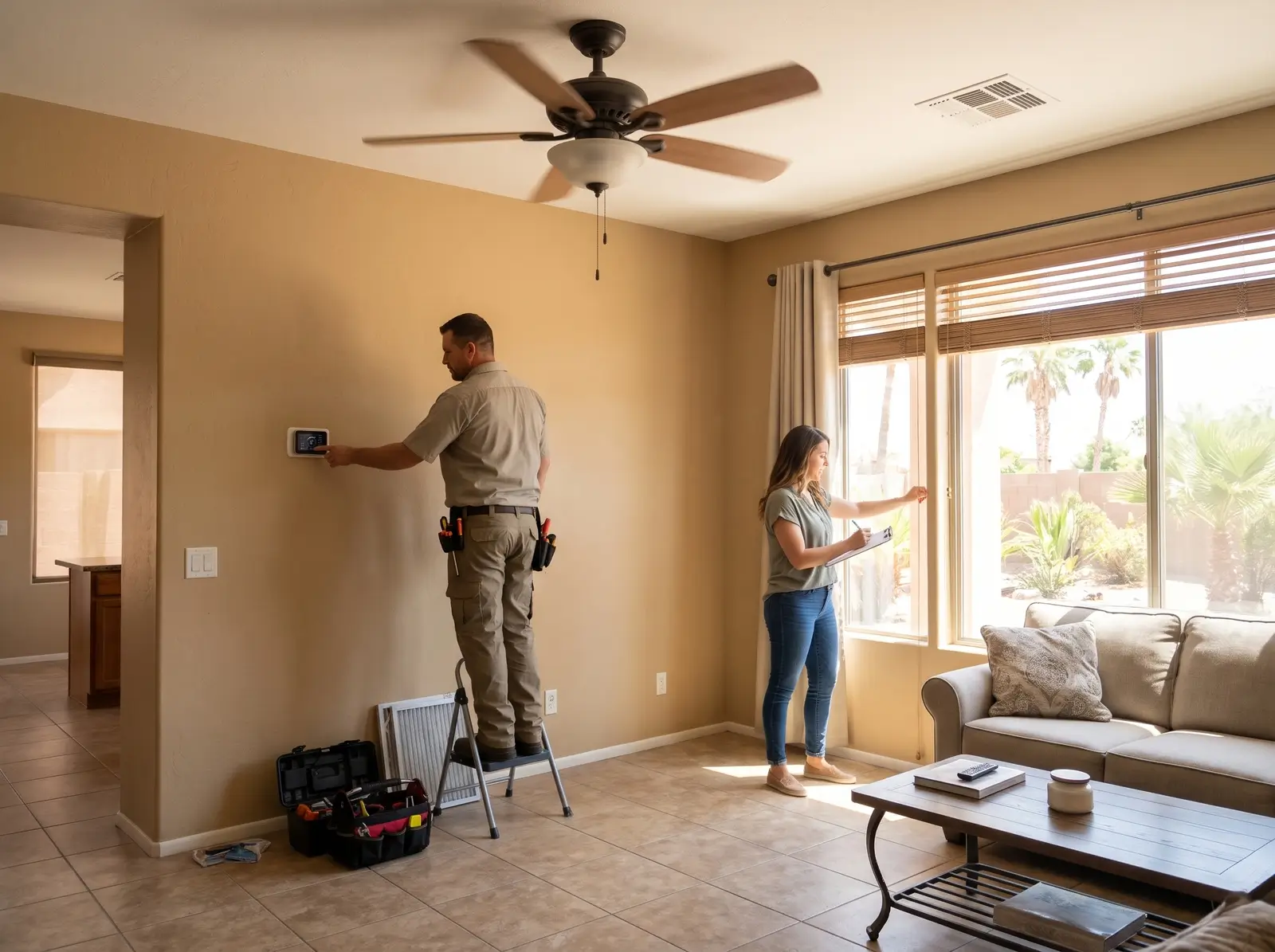
Your air conditioning system is your rental property's first defense against extreme heat, yet waiting until June or July can leave you competing with other tenants for technicians. Arrange a professional inspection in April or early May, before temperatures climb.
Prioritize these maintenance tasks:
Replace or clean air filters according to the manufacturer's recommendations.
Ask a qualified technician to inspect coils, refrigerant lines, electrical connections, and condensate drainage.
Check thermostat operation and keep supply and return vents unobstructed.
Address unusual noises, weak airflow, and inconsistent cooling before they become emergencies.
These steps help you catch problems early and reduce tenant disruptions. Ask the technician to explain the recommended repairs, the equipment's condition, and which issues need immediate attention.
Keep invoices and service dates together so you can spot repeat problems and plan future expenses.
If a home stays hot while the AC runs, arrange an assessment rather than assuming the thermostat needs to be set lower.
How Can You Reduce Cooling Costs Without Sacrificing Comfort?
High utility bills can erode cash flow when an aging system works too hard. Encourage reasonable thermostat settings, seal doors and windows, and maintain proper airflow so cooled air circulates efficiently.
Consider these additional efficiency measures:
Install suitable blinds or curtains to limit direct sunlight.
Seal air leaks around windows and exterior doors.
Ask an HVAC professional to assess insulation, ventilation, and system performance.
Review utility usage for unusual increases that could signal an equipment problem.
These improvements may reduce cooling demand, although savings depend on the property, equipment, and usage. Explain utility responsibilities in the lease, and never use thermostat restrictions as a substitute for safe, functional air conditioning. Additionally, compare bills across similar billing periods and investigate sudden changes before assuming tenants are using excessive energy.
How Do You Protect Rental Properties From Sunlight and Dry Heat?
Even a reliable AC system can struggle when sunlight enters unshaded windows, and outdoor temperatures stay high at night. Before AZ summer intensifies, inspect roofing, weatherstripping, windows, doors, and exposed materials; repair damage that compromises the home's envelope.
You can improve heat protection with a few practical upgrades:
Add suitable exterior shade or window coverings where appropriate.
Seal gaps that allow hot outdoor air to enter.
Inspect roof surfaces and drainage before the monsoon season.
Maintain trees and desert landscaping without blocking equipment or creating hazards.
For rentals in Phoenix and Maricopa County, including Mesa, Tempe, Glendale, and the north Valley, choose improvements suited to the property's construction and sun exposure.
Dry heat can still warm interiors, fade furniture, and increase cooling demand, so reducing heat gain helps protect your investment.
How Should You Prepare Vacant Rentals for Extreme Heat?
An empty rental can develop costly problems unnoticed, especially when temperatures stay high after sunset. Before a property sits vacant, schedule inspections of cooling equipment, plumbing, windows, doors, irrigation, and signs of heat damage.
What Should Your Vacant-Property Checklist Include?
Prioritize these tasks whenever you prepare a Phoenix rental for an extended vacancy:
Maintain appropriate cooling settings based on equipment guidance and property conditions.
Arrange periodic inspections and confirm that the AC unit operates correctly.
Check for plumbing leaks, irrigation failures, pests, and visible exterior damage.
Keep maintenance records, inspection photographs, and contractor receipts organized.
Vacancy procedures should reflect property conditions, lease arrangements, and insurance requirements. Document inspections, address problems early, and confirm who can access the property during emergencies and how contractors should report completed repairs.
If you own several rentals across the Valley, use a shared checklist while recording each home's specific equipment, access instructions, and maintenance history.
How Can You Help Tenants Stay Cool During an Arizona Summer?
A comfortable rental needs more than a working thermostat; tenants also need a clear way to report concerns. Explain how residents can report AC failures, unusual temperatures, or leaks, including after regular business hours.
Share ways to beat the heat without shifting maintenance duties onto residents. Recommend closing blinds, drinking water, and taking early-morning walks when it's safer; tenants should avoid strenuous activity during dangerous heat.
When temperatures become extreme, air-conditioned indoor activities may offer a break. Phoenix options include the Phoenix Art Museum, Arizona Science Center, Musical Instrument Museum, public pools, and community centers; check hours and seasonal availability before suggesting a visit.
These outings do not replace reliable cooling at home. Make sure any suggestions are optional and practical for the tenant; access, transportation, opening hours, and family needs can differ.
What Should You Do When an AC System Fails During a Heat Advisory?
Treat a cooling failure during dangerous temperatures as an urgent issue. Contact a qualified technician, communicate next steps, and document the complaint and resolution.
Keep the maintenance process consistent: record the date of each report, the steps taken, the vendor contacted, and the outcome.
This simple record helps you follow up when a repair is delayed, identify recurring equipment failures, and make better decisions about whether to replace an aging system rather than repeatedly paying for temporary fixes when planning future maintenance and annual budgets.
Do not promise unconfirmed repair times or assume a fan makes an overheated home safe. If conditions are unsafe, follow applicable legal requirements and emergency procedures, and direct residents to the city or county's official heat-safety resources.
Frequently Asked Questions
Q1. When should you prepare a Phoenix rental for summer?
Start in April or early May, then continue inspections and maintenance throughout the hottest months.
Q2. Does dry heat damage rental properties?
Heat and intense sunlight can strain cooling equipment, fade furnishings, dry landscaping, and expose weaknesses in roofing or seals.
Q3. Should you turn off the AC in a vacant rental?
Not automatically. Use appropriate settings based on equipment guidance, property conditions, and applicable insurance requirements.
Q4. Can shade help reduce cooling demand?
Yes. Suitable window coverings, exterior shade, and well-planned landscaping can limit direct solar heat gain.
Let Your Property Weather the Heat, While You Keep Your Peace
At Rely Real Estate, we believe your rental should be a lasting investment, not a summer-long worry.
Our services include maintenance coordination, tenant communication, move-in and move-out inspections, tenant screening, rent collection, financial reporting, and rent-ready preparation.
When extreme heat puts your rental to the test, we coordinate repairs, communicate with tenants, and keep you informed through owner reporting.
Contact Rely Real Estate to discuss your property management needs and spend less time juggling summer emergencies.
Other Resources:
Arizona's Rental Tax Ban: What Phoenix, AZ Owners Should Have Removed From Their Leases